
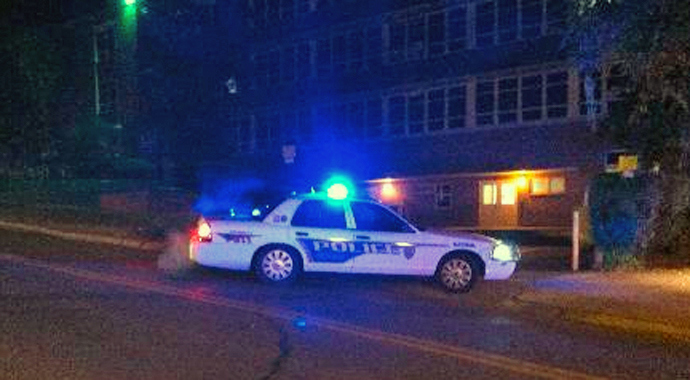
Thursday morning at 12:30 a.m. shots were heard outside Florida State University, sending hundreds of students in the library at the time into a panic. Moments later a man’s voice aired over the library speakers.
“There has been a shooting in the library. Stay where you are. If you know somebody who has a gun or you know somebody who has been shot, call 911,” he said. Then it was silent again.
Instantly, FSU student began taking action, barricading the doors of the rooms they were in and hiding between the bookshelves of the library. It was this calm and quick response that potentially saved the lives of 300 to 400 students.
With the dramatic increase in school shootings in the U.S., programs such as “Make the Call and Run. Hide. Fight.“ are being created by FBI. Funded by the Department of Homeland Security Grant Project, the program is part of the Regional Catastrophic Planning Initiative. This is an attempt to better prepare the public on how to react in case there is a shooting in any setting.
The initiative creates videos, articles and even sends experts to give lectures on how to respond in an active shooting scenario. No matter what program you choose to learn from, their advice is the same – when you find yourself in an active shooting, run, hide or fight.
In particular, the following are steps they ask the public to take during and after an active shooting:
RUN: When an active shooter is in your vicinity.
- If there is an escape path,
attempt to evacuate. - Evacuate whether others agree
to or not. - Leave your belongings behind.
- Help others escape, if
possible. - Prevent others from entering
the area. - Call 9-1-1 when you are safe.
HIDE: If an evacuation is not possible, find a place to hide.
- Lock and/or blockade the door.
- Silence your cell phone.
- Hide behind large objects.
- Remain very quiet.
- Your hiding place should:
- Be out of the shooter’s view.
- Provide protection of shots
are fired in your direction. - Not trap or restrict your
options for movement.
FIGHT: As a last resort, and only if your life is in danger.
- Attempt to incapacitate the
shooter. - Act with physical aggression.
- Improvise weapons.
- Commit to your actions.
9-1-1. When law enforcement arrives.
- Remain calm and follow
instructions. - Keep your hands visible at all
times. - Avoid pointing or yelling.
- Know that help for the injured
is on the way.
Upon hearing the alert, FSU students immediately followed these procedures, barricading the doors of the rooms they were in and hiding between the rows of books. The Tallahassee police took three to five minutes to respond.
Upon finding the gunman outside the library, police ordered the gunman to drop his weapon. When he failed to comply and shot at the officers, they returned the fire. The gunman was killed, and officials later identified him as an alumni of the university.
Later that night, it was reported that only three of the many students present were wounded. One was treated at the scene of the shooting, while the other two were taken to Tallahassee Memorial Hospital. The hospital reported that one of the students is stable while the other is still in critical condition.
FSU students and faculty consider themselves very lucky, especially compared to other schools affected by shootings. According to local police, however, it wasn’t entirely luck that saved them – it was the quick thinking and mental preparation of the students that stopped any fatalities from occurring that night.


