
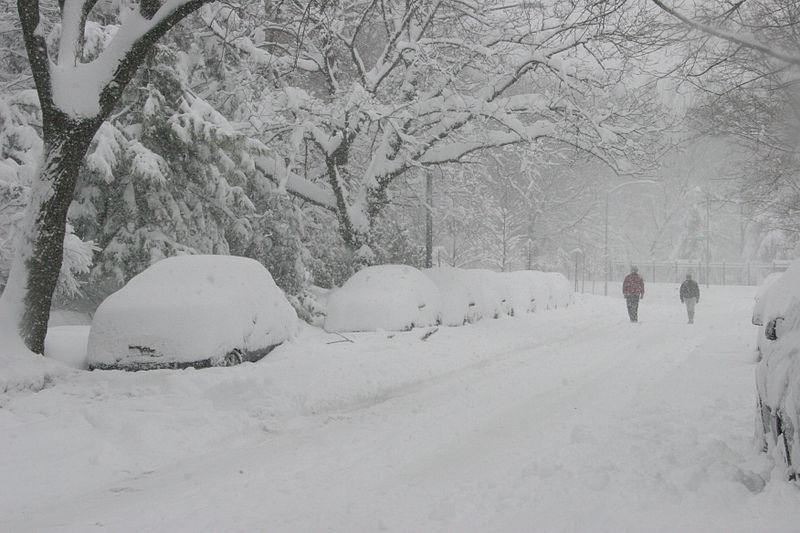
On Thursday, Jan. 22 the Water Science program at USU identified a local weather phenomenon.
“Well it was pretty cool that I got to be involved with labeling it,” said Reed Ballard, who participated in choosing a name for the phenomenon. “I don’t think a lot of students get to say they named a weather condition.”
It took a while, but the team finally came up with a name on Thursday.
“Well, we decided on Precipitation Merging System, or P.M.S. for short,” Ballard said. “Basically, when there’s a storm, there are 2 fronts going against each other. This P.M.S. is when there are 3 or more fronts hitting each other. This result in fluctuations in weather and temperature. Logan is a prime spot for weather P.M.S. This isn’t really a new occurrence, but it’s never been named before.”
We also asked about the connotations this acronym had in relation to a woman’s period. He replied, “Gee, I guess none of us really thought about that, but I don’t think it’s going to be a big deal.”
We then interviewed several students around campus to get their opinion on what they thought of the new name.
“They named it what?” Henry Winward exclaimed as he laughed. “I mean props to them for getting to name it, but I can’t believe they called it P.M.S. It makes sense, though, since the weather can’t ever stay the same.”
Stacy Layton, another student, said, “I actually find that really offensive.”
When asked why, she said, “Obviously, they knew what they were doing when they called it P.M.S. Typical macho, sexist pigs naming something scientific after a female bodily function.”
“It’s silly that anyone would get worked up over this,” said Eli Jacobson, a professor in the Water Science department. “This is simply the acronym for the words. It would be the same thing if we had a scientific word that had the acronym P.O.O.P. and yet people aren’t mature enough to handle these kinds of things.”
The Water Science program will not be changing the name of Precipitation Merging System, but they will be meeting to consider changing the acronym after several complaints from the scientific community.


